
Chemin de Saint-Jacques de Compostelle
The Way of Saint James is known by many names: the Chemin de Saint-Jacques de Compostelle, the Via Podiensis, the Pilgrims’ Trail.
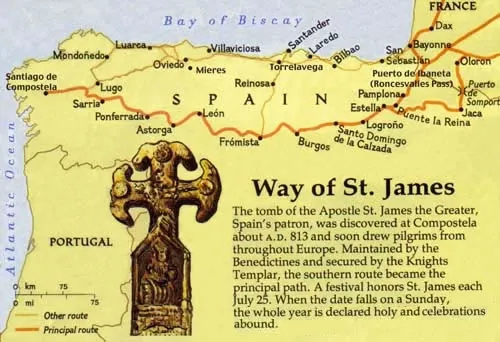
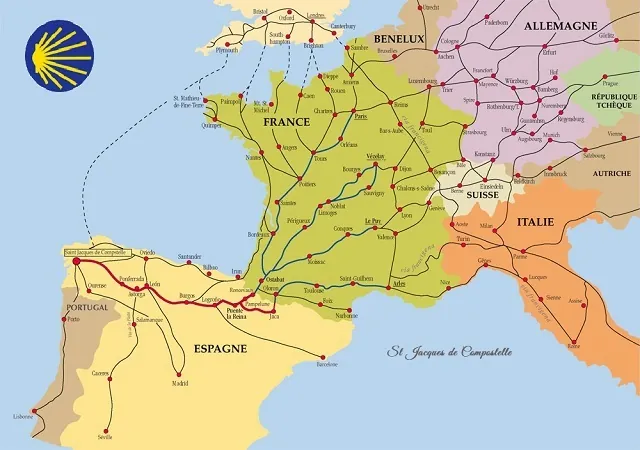
The first recorded pilgrimage was made by Bishop Gothescale in the tenth century. Since then, many thousands of pilgrims have followed in his footsteps. There are several roads leading to Santiago, but some routes attract significantly more pilgrims.
During the Middle Ages, the pilgrimage to St. James’ grave in Santiago de Compostela gained immense popularity. For many, it marked the singular major voyage of their lifetime.
The first narratives about the legendary Camino de Santiago date back to the 8th century. At that time, a local Galician hermit named Pelayo (Pelagius) claimed he saw an unusual group of stars in the night sky. That pointed him in the direction of the final resting place of Saint James and two of his disciples.
Soon after the discovery of the tomb, pilgrims began to trickle into the region of Galicia to bear witness to it. These early travellers trod paths likely worn over centuries by wandering people, mystics and nomads well before the time of Christ.
Part of the route of St Jacques de Compostelle passes Puy Robin, La Boissière-En-Gâtine, and is marked by the famous scallop shell. The route passing Puy Robin is also known as the GR 36, one of the longest hiking routes in France, linking the English Channel to the Pyrenees. This major 1,916-kilometre (1,190 mi) route crosses France from north to south and is signposted with the famous white and red GR markers.


